Image: European Protein and Yenher Holdings Berhad are building two fermentation plants based on Danish fermentation biotechnology. From the left: Director of Investment from NCER, Malaysia – Rizatuddin Ramli, CEO Jens Legarth (European Protein), Deputy Minister of Agriculture and Food Security – Datuk Arthur Joseph Kurup, Merve Imren Yalcin (Royal Danish Embassy), CEO Dato Cheng Mooh Tat (Yenher Holdings Berhad).
European Protein is building two new fermentation factories in Southeast Asia
European Protein partners with Yenher Holdings Berhad, the leading Malaysian feed producer, to establish two new fermentation plants to supply Southeast Asian markets.
Danish Biotechnology for Asian feed
On September 13, 2024, Yenher Holdings Berhad and European Protein announced their joint venture at an official signing ceremony at the Agricultural Fair, MAHA 2024.
The joint venture aims to transform plant proteins and byproducts into high-value feed ingredients through European Protein’s unique biotechnological fermentation process.
Dato Cheng Mooh Tat, Executive Chairman of Yenher Holdings Berhad, expressed his enthusiasm for the partnership, stating:
-This joint venture represents a strategic alignment of Yenher’s commitment to sustainability and innovation with European Protein’s unparalleled expertise in biotechnology. Together, we are poised to deliver exceptional value to the agricultural sector in Southeast Asia and beyond.
Bringing High-Quality Protein to Malaysia
Though Asian countries are known for their expertise in fermentation, industrial scaling of solid-state lacto-fermentation is a technology patented by European Protein and its parent company, Fermentationexperts, from Denmark.
Solid-state lacto-fermentation uses less water and energy and generates less waste, leaving an environmental impact of up to 63% less than traditionally refined soy protein sources[1].
The core of European Protein’s business is the fermentation of rapeseed meal, seaweed and soybean meal with lactic acid bacteria. The process enhances the feedstock’s nutritional value and digestibility while reducing antinutrients to a safe level. Feeding lacto-fermented protein increases animal health and productivity, ensuring a profitable business for animal producers.
Two Fermentation Factories Planned
The fermentation plants will join a family of three plants in Denmark, Ukraine, and the US, respectively. The first of two Malaysian plants will produce fermented proteins based on rapeseed meal, seaweed and soybean meal. The second plant will ferment a new product based on palm kernel meal.

[1] Comparison of fermented soy with soy protein concentrate (SPC). Product Environmental Footprint calculation of Global Warming Potential (GWP) of fermented complementary feed from cradle to gate produced in bulk at European Proteins factory site in Denmark. Calculated by Bureau Veritas HSE Denmark following the LCA and PEF core rules from ISO 14025:2006 and EU COM EF Annex 1 and 2, 2023, version 1.1. The calculated GWP-values are subject to continuous improvements and will be revised regularly as processes and inputs are optimized.
Image: Map of European Protein’s fermentation plants in Denmark, Ukraine, the US, and future fermentation factories in Southeast Asia.
Converts Palm Kernel Meal into High-Quality Feed
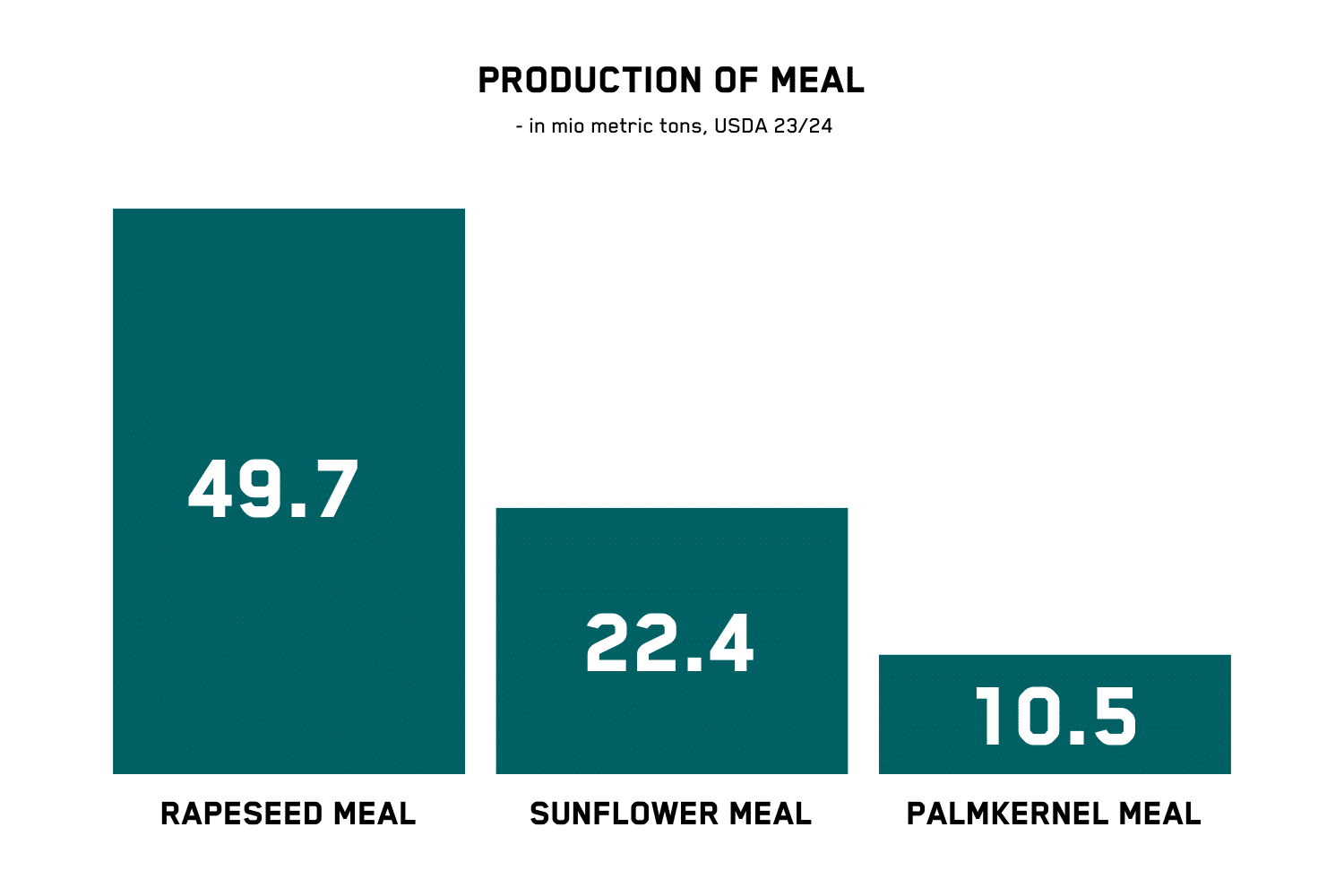
Indonesia and Malaysia are the world’s biggest palm oil manufacturers, producing 83% of the total market volume (USDA, 24). After pressing to remove oil, the byproduct, palm kernel meal, is used as a medium-grade protein feed and exported – some for EU’s ruminants. Due to its high fibre content and low digestibility, the 8.9 million tons of palm kernel meal (USDA, 24) is considered a low-value feed and rarely fed to monogastric animals, making Southeast Asia reliant on importing soy for pigs, poultry and aquaculture.
Using lactic acid bacteria, European Protein has significantly increased the digestibility of fibres, protein, and minerals in palm kernel meal, making it suitable for monogastric animals. As a result of the technological breakthrough, the second fermentation plant will convert low-quality palm kernel meal into a new high-quality feed, increasing Southeast Asia’s access to local protein for pigs, poultry, and aquaculture.
Jens Legarth, CEO and founder of European Protein, adds:
-We are thrilled to join forces with Yenher in this transformative venture. Our combined efforts will elevate the quality of feed ingredients and address critical global challenges like ensuring food safety and solving scarcity, naturally boosting animal health, and reducing the environmental impact of food production. This is merely the beginning of a new era for biosolutions in agriculture.
Figure: Overview of byproducts from rapeseed/canola, sunflower and palm oil production.
Ready for Production in 2025
The first factory in the joint venture, YH European Protein Asia Sdn. Bhd. (YHEPA), is anticipated to be ready to supply the Southeast Asian markets by Q4 2025. The €13.5 million first-stage investment will convert an existing facility in Penang into a state-of-the-art, GMP+-certified manufacturing plant. The timing of the second manufacturing plant has not yet been finalised.
PROTEINS
For more information about our fermented proteins